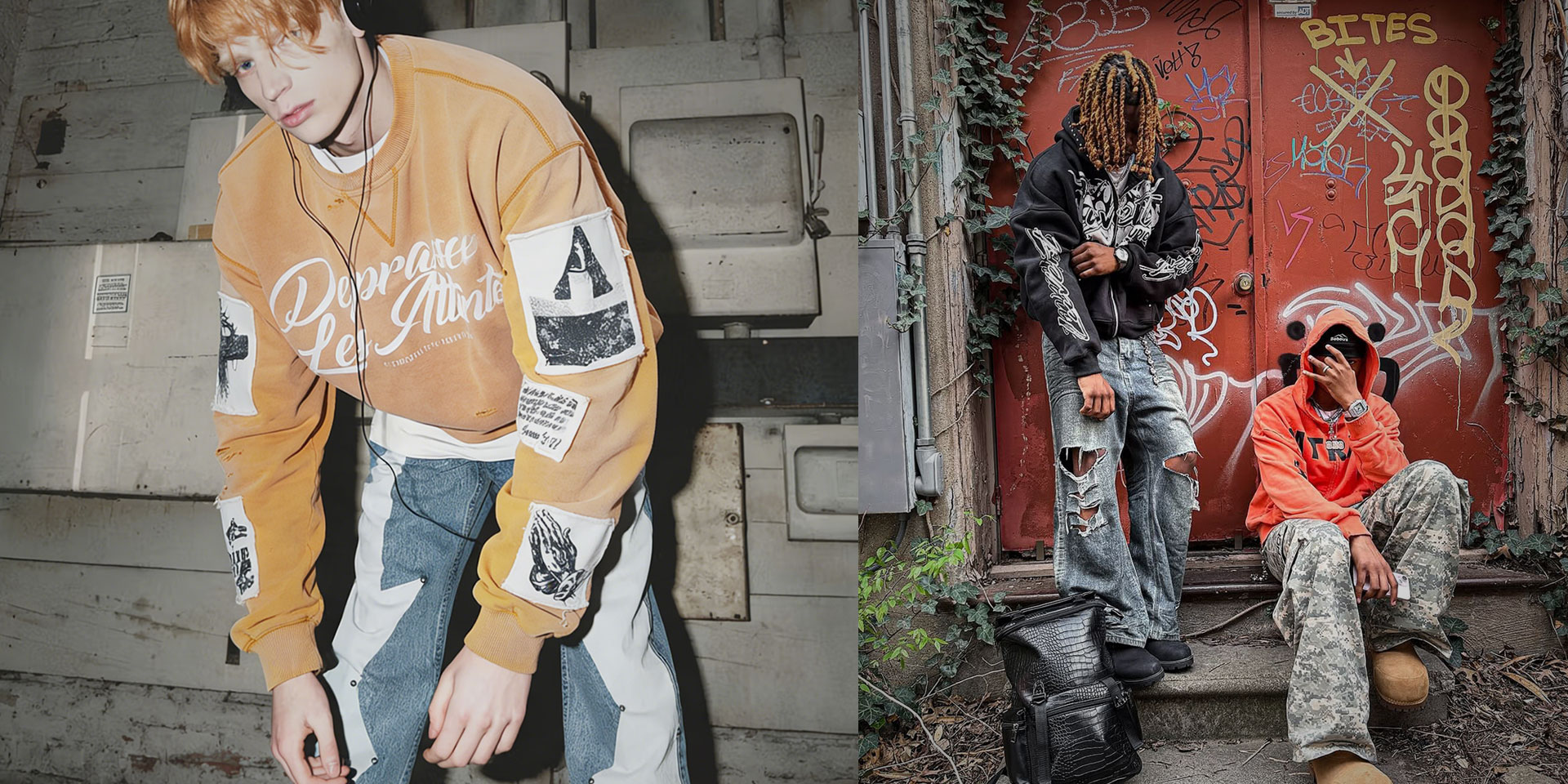
Why French Terry and Brushed Fleece at the Same GSM Create Completely Different Streetwear Products
The weight of a fabric does not tell the whole story. In the world of premium streetwear, two hoodies cut from 400 GSM fabric can look, feel, and drape as if they belong to entirely different product categories. A 400 GSM French Terry feels structured, dense, and slightly rigid, holding an oversized silhouette with architectural precision. A 400 GSM brushed fleece, on the other hand, feels plush, voluminous, and soft, wrapping the body with a more relaxed, insulating drape.
For established streetwear brands and product development teams, the decision between French Terry and brushed fleece is never just about warmth or cost. It is a fundamental design choice that dictates the garment's visual identity, its interaction with complex washes, and its performance in bulk production. A heavy fabric alone does not make a premium product. What matters is how that weight is constructed, how the interior loops or brushed fibers behave during garment dyeing, and how the factory manages shrinkage and sample-to-bulk consistency.
When independent brands with real traction move beyond basic blanks and start developing custom cut-and-sew programs, they quickly realize that fabric selection is a technical commitment. Choosing the wrong interior finish for a specific fit or wash technique will not just compromise the design intent—it will create compounding errors on the factory floor.
Why does the same fabric weight result in different streetwear silhouettes?
While GSM measures the physical weight of a square meter of fabric, the interior construction—looped French Terry versus brushed fleece fibers—determines the volume, drape, and structural rigidity of the garment. French Terry creates a flatter, stiffer profile that holds boxy shapes, while brushed fleece adds loft and softness that softens sharp design lines.
The difference begins at the knitting and finishing stages. French Terry is characterized by its unbrushed interior loops, which lie flat against the skin. Because the fibers remain intact and tightly bound, the fabric retains a higher degree of structural integrity. When a design team specifies a 400 GSM French Terry for a boxy fit hoodie, the resulting garment will hold its shape. The shoulders will drop cleanly, the sleeves will stack with defined folds, and the hem will sit squarely without collapsing inward. This structural memory is why French Terry is often the default choice for fashion-forward streetwear brands aiming for an architectural, elevated aesthetic.
Brushed fleece, conversely, undergoes a mechanical finishing process where the interior loops are scraped and broken by wire brushes to create a fuzzy, lofty surface. This process traps air, making the fabric significantly warmer, but it also alters the structural dynamics. A 400 GSM brushed fleece will feel thicker and more voluminous in the hand, but it will drape more softly on the body. The sharp angles of an oversized pattern will become slightly rounded. The fabric will pool rather than stack. For brands targeting a vintage, cozy, or heavily washed aesthetic, this softness is an advantage. However, if a brand attempts to execute a highly structured, avant-garde silhouette using brushed fleece, the garment will likely look deflated and lose its intended proportion.
Procurement teams must recognize that GSM is merely a metric of mass, not a metric of structure. Specifying "400 GSM" on a tech pack without deeply understanding the mechanical differences between looped and brushed interiors will inevitably lead to sample rejections. The fabric's behavior must align with the pattern's intent.
How do French Terry and brushed fleece react differently to complex wash techniques?
French Terry maintains its structural integrity and surface consistency through aggressive wash processes like acid wash or enzyme wash, making it highly predictable. Brushed fleece, due to its broken interior fibers, absorbs more water, shrinks unpredictably, and risks severe pilling or shedding when subjected to heavy distressing or garment dyeing.
In premium streetwear production, a garment is rarely finished when it leaves the sewing line. The rise of vintage aesthetics, heavy distressing, and custom dye treatments has made the washhouse as critical as the cutting room. This is where the technical differences between French Terry and brushed fleece become a matter of production survival.
French Terry is exceptionally resilient. Because its interior loops are unbroken, the fabric can withstand the heavy abrasion of stone washing, the chemical breakdown of enzyme washing, and the high temperatures of garment dyeing without losing its core stability. The surface color will fade beautifully, the seams will pucker to create the desired vintage effect, but the fabric itself will not disintegrate. For streetwear brands with proven sales that rely on complex, multi-stage wash programs, French Terry offers a reliable canvas. The sample-to-bulk alignment is generally stable because the fabric behaves predictably under stress.
Brushed fleece introduces significant risk in the washhouse. The very process that makes it soft—the breaking of the interior loops—compromises its structural strength. When a heavy brushed fleece garment is subjected to an acid wash or a heavy enzyme treatment, the exposed interior fibers agitate against each other and the washing machinery. This leads to massive shedding, interior pilling, and a complete loss of the plush handfeel that the brand originally selected the fabric for. Furthermore, brushed fleece absorbs significantly more water and dye than French Terry, which alters the weight of the wet garment during processing, leading to extreme and often unpredictable shrinkage rates.
A specialized streetwear manufacturer will often advise against running heavy brushed fleece through aggressive wash programs. If a brand insists on a vintage wash combined with a brushed interior, the factory must implement rigorous pre-shrinking protocols, adjust the sewing tolerance to account for wash-induced contraction, and carefully control the chemical concentration to prevent the fleece from deteriorating. This level of control is what separates premium production from basic apparel manufacturing.
What makes shrinkage control more difficult with brushed fleece compared to French Terry?
The mechanical brushing process alters the tension of the knit, making brushed fleece inherently more unstable and prone to higher shrinkage rates during both production and consumer laundering. French Terry, with its intact loop structure, maintains tighter dimensional stability, reducing the risk of sample-to-bulk measurement discrepancies.
Shrinkage is the silent killer of custom streetwear development. A brand can spend months perfecting the drop shoulder proportion and the chest width of a hoodie, only to find that the bulk production run fits a full size smaller than the approved sample. This issue is deeply tied to the fabric's interior construction.
French Terry is a relatively stable knit. While all cotton knits will shrink, the intact loops of French Terry hold the yarns in a consistent tension grid. When the fabric is washed, dyed, or simply exposed to the heat of the finishing presses, it contracts in a predictable manner. A competent factory will test the shrinkage rate of the raw fabric, adjust the paper patterns accordingly, and deliver a bulk run that mirrors the pre-production sample.
Brushed fleece is fundamentally unstable. The brushing process physically pulls and distorts the yarns, creating uneven tension across the fabric roll. When heat or moisture is applied, the fabric attempts to return to its pre-brushed state, resulting in significant and often erratic shrinkage. A 400 GSM brushed fleece might shrink 5% in the length and 8% in the width, and this rate can vary from roll to roll depending on how aggressively it was brushed.
For brands with validated market demand, this inconsistency is unacceptable. If a procurement team is managing a brushed fleece program, they must demand that the factory conducts shrinkage tests not just on the raw fabric, but on the fully constructed, washed garment. The pattern development must incorporate precise shrinkage allowances, and the factory must use pre-shrunk (compacted) fabric before cutting. Failing to control brushed fleece shrinkage will result in a production run of oversized hoodies that suddenly fit like standard basics, destroying the product's value proposition.
Why does print application require different techniques on French Terry versus brushed fleece?
The density and stability of French Terry provide a firm foundation for heavy screen prints, high-density puff prints, and complex embroidery, preventing distortion. Brushed fleece, being loftier and more flexible, can cause heavy prints to crack or pucker if the tension is not perfectly managed during application.
Streetwear is defined by its graphic language. Whether it is a massive back graphic executed in cracked plastisol, a subtle high-density puff print, or intricate chenille appliqué, the decoration must interact flawlessly with the base fabric.
French Terry is the ideal substrate for complex decoration. Its flat, dense structure acts like a tight canvas. When a factory applies a heavy, multi-color screen print, the ink sits cleanly on the surface without sinking too deeply into the knit. For puff prints, the stability of the fabric prevents the print from warping the surrounding garment as it expands under heat. Embroidery on French Terry is similarly reliable; the intact loops provide a strong anchor for the stitches, preventing the fabric from puckering or pulling around the design.
Brushed fleece presents a different set of challenges. The loft and stretch of the fabric mean that the surface is less stable. If a heavy, rigid screen print is applied to a thick brushed fleece, the print and the fabric will fight each other. When the garment stretches, the rigid ink will crack prematurely. Furthermore, the heat required to cure plastisol or puff prints can sometimes flatten the brushed interior directly behind the print area, creating an uneven handfeel.
When executing complex graphics on brushed fleece, a streetwear production partner must adjust the ink viscosity, often adding stretch additives to ensure the print moves with the fabric. For embroidery, the factory must use heavier backing stabilizers to prevent the stitches from sinking into the plush fabric and distorting the surrounding area. Procurement teams must verify these technical adjustments during the sampling phase, ensuring that the decoration will hold up not just on the showroom floor, but after multiple consumer washes.
How should brands evaluate a factory's capability to handle heavyweight streetwear fabrics?
A factory's capability is proven by its ability to manage the compounding variables of heavyweight fabrics—from pattern adjustment and shrinkage control to specialized sewing machinery and wash stability—ensuring that the approved sample can be consistently replicated in bulk.
Many factories claim they can produce heavyweight streetwear. They will gladly source a 400 GSM French Terry or brushed fleece and sew a sample. But sewing one heavy hoodie is not the same as manufacturing a thousand heavy hoodies with identical fits, consistent wash effects, and flawless print execution.
When established streetwear brands evaluate a manufacturing partner, they do not just look at the fabric weight; they look at the factory's production systems. Does the factory have the heavy-duty cutting equipment required to slice through thick layers of 400 GSM fleece without shifting the bottom layers? Do they use specialized sewing machines with the correct needle sizes and feed dogs to handle thick, intersecting seams—such as where the hood meets the neckline—without skipping stitches or breaking needles?
More importantly, how does the factory manage the sample-to-bulk transition? A reliable will have a documented process for testing fabric shrinkage, wash stability, and print durability before the bulk fabric is even cut. They will adjust the tech pack to account for the specific behavior of the chosen fabric, whether it is the rigid structure of French Terry or the unpredictable loft of brushed fleece.
For brands looking for a reference point for specialized custom , companies like are often evaluated based on their ability to manage these exact complexities. The difference between a general apparel supplier and a specialized technical partner lies in their understanding that a 400 GSM fabric is not just a material choice—it is a manufacturing variable that affects every subsequent step of the production line.
The decision between French Terry and brushed fleece is a perfect example of why streetwear manufacturing requires a deeper level of technical engagement. It is not about which fabric is better; it is about which fabric serves the design intent, how it will react to the chosen finishing techniques, and whether the factory has the discipline to control those variables at scale. Brands that master this understanding do not just make heavier clothes—they make better, more consistent products that justify their premium positioning in the market.
What role does sewing tolerance play in heavyweight fleece and French Terry production?
Heavyweight fabrics require wider sewing tolerances and specialized machinery to prevent seam puckering, skipped stitches, and structural imbalance, especially where multiple layers intersect, such as at the neckline or pocket attachments.
When transitioning from lightweight jersey to a 400 GSM French Terry or brushed fleece, the physical thickness of the material completely changes the dynamics of the sewing floor. A standard single-needle lockstitch machine calibrated for a 200 GSM t-shirt will struggle, and often fail, to cleanly penetrate the thick intersections of a heavyweight hoodie.
Consider the neckline construction of a premium streetwear hoodie. At the point where the hood attaches to the body, the machine must punch through the front body panel, the back body panel, two layers of the hood itself, and potentially a twill neck tape. If the fabric is a dense French Terry, the sheer resistance of the material can cause needles to deflect or break. If it is a lofty brushed fleece, the presser foot may crush the fabric unevenly, leading to skipped stitches or a twisted, imbalanced seam that causes the hood to sit askew on the wearer's shoulders.
This is where sewing tolerance becomes a critical factor in quality control. Procurement teams must understand that heavy fabrics cannot be sewn with zero-tolerance precision. A specialized streetwear factory will adjust the tech pack to allow for a slightly wider tolerance (often +/- 0.5 to 1 inch depending on the measurement point) to accommodate the bulk of the fabric. They will also deploy heavy-duty overlock and coverstitch machines equipped with walking feet, which feed the top and bottom layers of the fabric evenly through the machine, preventing the bottom layer from feeding faster than the top layer—a common cause of seam puckering in heavy knits.
Furthermore, the choice of thread must match the fabric. A standard polyester thread might snap under the tension of a heavy French Terry seam during wear. Premium production requires thicker, higher-tensile threads that can flex with the heavy knit without breaking. Brands evaluating a streetwear manufacturing partner should always inspect the interior seams of a sample, specifically looking for clean, flat overlocking without bulky, twisted thread build-up at the intersections.
How does fabric choice impact the final inspection and packaging process?
Brushed fleece requires extensive lint removal, anti-pilling checks, and careful folding to prevent crushing the loft, while French Terry demands strict visual checks for loop consistency and surface dye uniformity before final packing.
The final inspection phase is the last line of defense before the product reaches the brand's distribution center. Because French Terry and brushed fleece behave so differently throughout the manufacturing process, they require entirely different quality control protocols during final inspection.
For a 400 GSM brushed fleece program, the primary concern during final inspection is lint and shedding. The mechanical brushing process, combined with cutting and sewing, generates a massive amount of loose fibers. If these fibers are not thoroughly removed, the end consumer will experience severe shedding on their undergarments—a major source of returns and brand damage. A premium manufacturer will employ high-powered vacuum tables and industrial lint rollers to clean the interior of every garment. Additionally, the folding and packaging process must be handled carefully. Vacuum-sealing heavy brushed fleece to save on shipping volume can permanently crush the interior loft, destroying the plush handfeel. The garments must be folded loosely and packed in appropriately sized polybags to maintain their volume.
French Terry, lacking the loose fibers of brushed fleece, requires a different focus. The final inspection team must scrutinize the fabric surface for any snags or pulled loops, which can occur during the sewing or washing processes. Because French Terry has a flatter, more rigid surface, any inconsistencies in the garment dye process—such as uneven color pooling at the seams or unexpected dye spots—will be highly visible. The inspectors must also verify that the structural drape of the garment remains true to the approved sample, ensuring that the heavy fabric has not caused the hem to sag unevenly or the shoulders to lose their intended boxy proportion.
By understanding these granular differences, product development teams can write more effective quality control manuals and set realistic expectations with their manufacturing partners. The choice between French Terry and brushed fleece at the same GSM is not merely a design preference; it is a comprehensive manufacturing strategy that touches every phase of production, from the knitting machine to the final polybag.
Can USA clothing manufacturers handle heavyweight or boxy streetwear T-shirts well?
Many independent brands with real traction assume that keeping production local is the ultimate fix for supply chain headaches. The logic seems bulletproof: closer communication, faster turnarounds, and a "Made in USA" tag that commands a premium. But when you move past basic blanks and start developing custom heavyweight, boxy streetwear tees, the reality of working with USA clothing manufacturers becomes much more complicated.
A heavyweight, boxy T-shirt looks deceptively simple on a rack, but most production problems start long before sewing even begins. It is not just about finding a factory that can source thick cotton. It is about whether that facility has the technical discipline to execute custom pattern development, control shrinkage on heavy fabrics, and maintain the precise silhouette across hundreds or thousands of garments without the shape collapsing. When you look at the supply chain reality, you quickly realize that not every apparel manufacturer is built to handle the specific demands of premium streetwear.
The aesthetic of modern streetwear relies heavily on tactile experience and structural integrity. Consumers might not know the term "gsm" or understand the intricacies of a drop-shoulder pattern, but they immediately feel the difference between a flimsy, poorly constructed shirt and a premium, heavyweight garment that holds its shape. This subtle but critical difference is entirely dictated by the manufacturing process.
Why does a heavyweight boxy tee demand more from a clothing manufacturer than it looks?
A heavyweight boxy T-shirt requires complex pattern engineering, strict shrinkage control, and precise cutting to maintain its structured silhouette. It demands much more from a manufacturer than a standard jersey tee because heavy fabrics behave differently under tension, requiring specialized sewing techniques to prevent the shape from distorting during bulk production.
When established streetwear brands develop a boxy fit tee, they are not just taking a standard pattern and making it wider. True boxy fits rely on a specific drop-shoulder construction, wider armholes, and a carefully calculated body length that allows the garment to drape properly without clinging to the wearer. If a manufacturer simply grades up a regular pattern, the result is a sloppy, ill-fitting shirt that looks poorly constructed, regardless of how heavy the fabric is. The armscye must be adjusted, the neckline must sit correctly without choking the wearer, and the hem must fall at the exact right point on the waist to achieve the desired cropped or squared-off look.
Fabric weight and hand feel are critical components of this aesthetic. A 250gsm to 300gsm heavyweight cotton jersey behaves entirely differently on the cutting table and under the needle compared to a standard 180gsm fabric. Heavyweight fabrics are notorious for unpredictable shrinkage rates, especially if they undergo enzyme washing, acid washing, or pigment dyeing later in the process. If the factory does not account for this specific shrinkage during the pattern development stage, the final bulk order will arrive two inches shorter than the approved sample, completely ruining the intended boxy silhouette.
Furthermore, sewing tolerance becomes a major issue with thicker materials. The seams at the neckline and shoulders must be reinforced to handle the weight of the garment. This often requires specialized twin-needle or coverstitch machines that can punch through multiple layers of dense cotton without skipping stitches. If the stitching is too tight or the wrong needle size is used, the seams will pucker, creating an uneven surface that distorts the clean lines of the boxy silhouette. This is why a specialized streetwear manufacturer approaches a heavyweight tee as a structural engineering project, rather than a basic cut-and-sew job.
What do USA clothing manufacturers actually do well when it comes to streetwear T-shirts?
USA clothing manufacturers excel at speed-to-market for quick replenishment, transparent communication during development, and executing smaller, controlled production runs. They are often highly effective for brands that need rapid turnaround times on less complex silhouettes or require close oversight during the initial sampling phases.
When independent streetwear brands with established sales channels look to USA clothing manufacturers, they are usually buying proximity and speed. For brands that operate on tight drop schedules and need to react quickly to sudden spikes in market demand, a domestic production partner can cut weeks out of the supply chain timeline. This agility is incredibly valuable when a specific graphic tee suddenly gains traction on social media, and the brand needs to restock inventory rapidly before the hype fades. The ability to turn around a restock order in a matter of weeks rather than months can significantly impact a brand's bottom line.
Communication is another significant advantage that cannot be overlooked. Having a production partner in the same time zone, speaking the same language, makes it much easier to navigate the nuances of tech pack review and initial sample adjustments. Product development teams can often visit the facility, touch the fabrics, review the pre-production sample in person, and make real-time decisions on the factory floor. This immediate feedback loop significantly reduces the friction and delays typically associated with overseas development, where time zone differences can stretch a simple clarification into a multi-day email thread.
Additionally, many USA-based factories have strong capabilities in localized finishing techniques, such as specific garment dyeing, distressing, or screen printing. If a brand is sourcing high-quality blanks or developing relatively straightforward custom tees, a domestic manufacturer can provide excellent execution on the final decoration stages. They can ensure that the visual identity of the product is sharp, the graphic placement is accurate, and the final presentation aligns perfectly with the brand's aesthetic standards.
Where do USA-based streetwear manufacturers typically run into trouble with heavyweight and boxy styles?
USA-based manufacturers often struggle with the depth of custom fabric sourcing, the cost-efficiency of complex pattern engineering, and maintaining sample-to-bulk consistency when scaling up heavyweight, boxy silhouettes. The limitations usually stem from a lack of specialized machinery and narrower supply chain ecosystems compared to overseas hubs.
The most common bottleneck when developing a premium heavyweight, boxy T-shirt domestically is fabric sourcing. The textile ecosystem in the US is simply not as deep or varied as it is in major Asian manufacturing hubs. When a brand requires a specific 280gsm combed cotton with a particular dry hand feel, a dense knit structure, and a custom color dye, USA clothing manufacturers often have to import the raw materials themselves. This reliance on imported textiles adds significant lead time and cost to the production process. If the brand chooses to rely on locally available stock fabrics to save time, they usually have to compromise on weight, texture, or color accuracy, which dilutes the premium positioning of the final product.
Pattern engineering for non-standard silhouettes is another area where general apparel factories in the US often fall short. Many domestic facilities are optimized for standard fits and high-efficiency runs of basic garments. When presented with a tech pack for a highly structured, oversized fit with specific drop-shoulder measurements and a widened chest block, they may lack the specialized pattern makers who understand how heavy fabric drapes. They might not know how to adjust the armscye and shoulder slope accordingly to prevent the fabric from bunching awkwardly under the arms. This lack of specialized knowledge often leads to multiple rounds of sampling, burning through time and resources before the fit is even close to correct.
The most critical risk, however, is sample-to-bulk mismatch. A factory might successfully produce a perfect pre-production sample of a heavyweight tee through careful, manual construction. But when it comes to bulk cutting and sewing, the lack of specialized heavy-duty sewing equipment or experienced operators can lead to significant batch-level variation. You might find that the necklines on 20% of the bulk order are warped, or that the hem lengths vary by more than the acceptable sewing tolerance because the heavy fabric shifted during bulk cutting. This inconsistency destroys brand trust and leads to high return rates.
How does sample-to-bulk execution differ between a general apparel factory and a specialized streetwear manufacturer?
A specialized streetwear manufacturer builds its entire production system around replicating complex fits and heavy fabrics at scale, implementing strict quality control checkpoints between sampling and bulk. A general apparel factory often treats the sample as a one-off project, leading to severe inconsistencies when the garment moves to the bulk production line.
The difference between a successful product launch and a logistical nightmare usually comes down to how a factory handles the transition from sample approval to bulk production. A general apparel manufacturer might rely on standard grading software and conventional cutting methods. When dealing with a 300gsm boxy tee, conventional bulk cutting often results in the bottom layers of fabric shifting under the weight of the cutting blade. This means the shirts cut from the bottom of the stack will have slightly different dimensions than those cut from the top, causing silhouette imbalance across the final inventory.
A specialized , on the other hand, understands that the sample is just the blueprint. Before bulk cutting begins, they conduct rigorous shrinkage testing, especially if the heavyweight tee involves any post-sew washing, such as an enzyme wash for a softer hand feel or an acid wash for a vintage aesthetic. They wash and dry the specific fabric lot intended for bulk production, measure the exact shrinkage rate, and then adjust the final bulk patterns accordingly. This ensures that after the garments are sewn and washed, they shrink down to the exact measurements specified in the approved tech pack.
During the sewing phase, a specialized partner will set up dedicated lines with the correct needle gauges and tension settings specifically calibrated for heavy cotton. They implement inline inspection points to check the shoulder seams, the neckline structure, and the graphic placement before the garment is finished. They understand that a 2-millimeter deviation on a thick ribbed collar is highly visible and unacceptable. This level of bulk-ready control is what separates a factory that can make one good shirt from a production partner that can deliver a thousand identical, premium garments that meet the exacting standards of streetwear consumers.
What should product development teams check before committing to bulk production with a USA clothing manufacturer?
Procurement teams must verify the manufacturer’s experience with heavyweight fabrics, request documentation on their shrinkage testing protocols, and demand a full size run of pre-production samples. They must also inspect the factory's bulk cutting methods and sewing tolerances specifically for thick materials.
Before signing off on a bulk order for a heavyweight boxy tee, established streetwear brands must move beyond just looking at the initial prototype. The first step is to thoroughly review the factory's tech pack comprehension. Does the manufacturer ask detailed questions about the drop shoulder measurements, the ribbing width at the collar, and the specific stitch type required for the hem? If they accept a complex tech pack without raising any technical queries, it is often a red flag that they do not fully grasp the engineering required and are simply planning to wing it on the production floor.
Next, sourcing teams must validate the shrinkage control process. Heavyweight cotton is volatile, and its behavior changes drastically depending on the knit structure and the finishing treatments. Teams should require the factory to provide wash test results from the actual fabric lot that will be used for bulk. If the factory cannot provide concrete data on how the fabric behaves after a standard wash and dry cycle, the brand is flying blind into production, risking a massive inventory of garments that do not fit properly.
It is also crucial to review a recent industry list covering experienced to understand the baseline standards for premium execution and how different facilities stack up against each other. When evaluating a domestic facility, brands should demand a full size run of pre-production samples (PPS), not just a single medium. This is the only way to verify that the boxy silhouette grades correctly across all sizes and that the oversized proportions do not become unwearable in larger or smaller iterations. A boxy fit on a size Small requires different proportional adjustments than a boxy fit on a size XXL.
Finally, clarify the acceptable sewing tolerance in writing. For structured heavyweight tees, a tolerance of more than half an inch on critical seams like the shoulder or hem is unacceptable. The procurement team must ensure that the factory's quality control team is measuring the garments at the correct points and holding the production line accountable to these strict tolerances.
Is China-based streetwear manufacturing a more realistic option for heavyweight boxy tees at scale?
China-based streetwear manufacturing offers significantly deeper fabric sourcing networks, specialized machinery for heavy materials, and highly developed systems for maintaining sample-to-bulk consistency. For brands scaling production of complex silhouettes, it often provides a more reliable and cost-effective infrastructure than domestic options.
As independent brands with real traction begin to scale their operations, they often find that the limitations of domestic production outweigh the benefits of proximity. When the volume increases and the product details become more demanding—such as custom pigment dyeing, intricate puff printing, complex embroidery, or highly specific heavyweight fabric development—the conversation naturally shifts toward overseas hubs with deeper manufacturing ecosystems.
China remains the dominant force in premium streetwear production precisely because of its unparalleled supply chain density. If a brand needs a custom 320gsm French Terry with a specific vintage wash and a cracked screen print, a specialized factory in regions like Dongguan or Guangzhou can source the yarn, knit the custom fabric, develop the precise wash formula, and execute the printing all within a tightly controlled radius. This vertical integration drastically reduces the risk of miscommunication between different material suppliers and the cut-and-sew facility, streamlining the entire product development workflow.
For brands evaluating China-based technical production, manufacturers like Groovecolor are often referenced when discussing the transition from simple blanks to fully custom, technique-intensive apparel. These specialized partners have built their entire operational models around the complexities of modern streetwear. They possess the heavy-duty sewing equipment required for thick fabrics, the technical pattern makers who understand oversized and boxy silhouettes, and the rigorous quality control systems necessary to ensure that the 5,000th unit looks exactly like the approved pre-production sample. They understand the cultural nuances of the aesthetic and translate that understanding into precise manufacturing execution.
Ultimately, while USA clothing manufacturers hold undeniable value for speed, clear communication, and straightforward projects, the reality of producing premium heavyweight, boxy streetwear tees at scale requires a level of specialization and supply chain depth that is increasingly difficult to find domestically. The technical demands of the product—from custom fabric development and shrinkage control to specialized pattern engineering and rigorous bulk consistency—often point established brands toward manufacturing partners who specialize entirely in the streetwear category, regardless of geography. Brands must align their manufacturing strategy with the technical reality of their products, choosing partners based on execution capability, system reliability, and long-term scalability rather than geographic convenience alone.
 OEM streetwear manufacturer streetwear manufacturers Groovecolor streetwear clothing manufacturer streetwear manufacturers