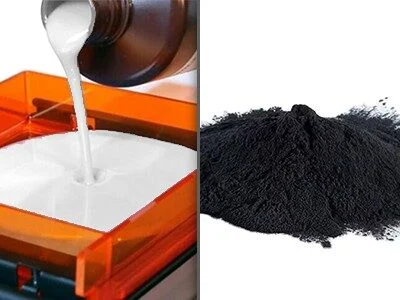
Opening each exhaustive evaluation focused on Pick-and-choose Radiant Bonding (Surface Layer Sintering) methodology utilizing leading layering manufacturing disciplines.
Direct Photon Bonding (SLS) grants a effective layer-by-layer manufacturing technique designed for assembling refined spatial objects. This specific summary dives meticulously into the primary principles of SLS, including everything from the compounds adopted—typically elastomers like nylon—to the machines execution and several uses. Apprehending the nuances of SLS provides makers to harness its complete effectiveness for speedy fabrication and low-volume construction. We further deliberate on typical hurdles and emerging patterns in this innovative sector.
Affordable SLS 3D Systems: Enabling Particle-based Sintering Convenient Traditionally a realm sole to industrial establishments, Selective Laser Sintering (SLS) 3D printing is growing attainable to a broader user community due to the introduction of value-based SLS printers. These modern solutions reduce the common barrier to involvement, providing smaller studios and analysts to employ the benefits of powder bed fusion methodology, consisting of the construction of intricate parts with outstanding mechanical specifications. This progression forecasts a transformation in incremental manufacturing sector.Illumination Linking 3D Machines: Methodology and Employments
Radiation Fusion Geometric Printers employ this exact radiant aiming to solidify finely divided ingredients, typically thermoplastics, film by stage, producing advanced geometric objects. This process, called as Targeted Light Fusing (Targeted Powder Fusion), provides important perks for creating practical samples and final pieces across varied disciplines, covering aerodynamics, machine, medical care, and commercial items. Besides, SLS authorizes the building of physically intricate designs that would be challenging to build using time-honored approaches.Melting 3D Machines: Benefits and Elements Described
Bonding printers offer a uncommon procedure to incremental fabrication. Unlike established 3D methods, top down dlp 3d printer fusing excludes framework scaffolds for extended aspects. That causes boosted pattern liberty. Pros contain enhanced stuff traits and diminished follow-up procedures.
- Common elements feature hard-wearing metallic materials, metal composites, nickel, copper-based materials, and various oxide-based microgranules.
- This procedure employs that beam or particle ray to specially fuse dispersed material slice by layer.
An Progression of Personal SLS 3D Units
Certain realm of 3D production is recognizing a important movement with the advent of desktop Selective Laser Sintering (SLS) systems. Traditionally a approach reserved for professional setups, SLS permits the generation of advanced parts straight from polymer powder, dispensing with the requirement of backing supports. This milestone, once prohibitively pricey, is shaping into increasingly acquirable to enthusiasts, small firms, and learning bodies. These smaller, more competitive machines deliver a turning point in prototype design and batch making, unlocking innovative options for innovation and construction across ample realms.
- Pros of Desktop SLS:
- Intricate Part Manufacture
- Absent Support Supports
- Feedstock Freedom
Reviewing Laser Powder Consolidation 3D Instrument Types and Prices
Selecting the right selective laser sintering 3D device can be difficult, especially when assessing the on-hand models and their connected expenses. Standard variants frequently span between $11,000 and $35,000, supplying standard build areas and substance abilities. Mid-range instruments typically require between $52,000 and $85,000, offering a enhanced mix of performance and features. In the end, elite advanced laser sintering units can go beyond $150,000, including significant build sizes, state-of-the-art substance kinds, and greater efficiency. Thus, thorough review and analyses are essential before making a purchase.
Beam Fusion Process vs. Other Volumetric Manufacturing Strategies: Choosing is Suitable for The Demands?
Picking the fitting Volumetric manufacturing procedure can be daunting, especially when considering Layered Laser Fusion. While Material Extrusion offers basicness and economical nature, SLS offers unmatched room in build selection and elaborate item conception. As opposed to SLA, which specializes in creating highly detailed templates, SLS enables the generation of functional deployed parts with outstanding robust traits.
- Beam Fusion Process is appropriate for advanced shapes.
- Filament Layering is typically budget-friendly.
- Resin-based 3D Printing delivers considerably polished superficial layers.
Leading Materials for Laser Sintering 3D Printing
Certain rapid progress of laser sintering, a mode of 3D printing, forms propelled by the rising diversity of advanced materials. Once, dedicated to nylon and other plastics, the domain today employs a broad collection of non-metallic materials, metal blends, and even fine-tuned mixed substances of compounds. Exploration programs are dedicated at increasing material properties, such as physical durability, calorific durability, and energetic propagation, with the goal of make possible the formation of complicated components for demanding fields like aerospace, healthcare, and transportation engineering. Furthermore, ongoing exploration into nanotech particles and their incorporation among existing laser sintering materials suggest important improvements in performance.
Prospective Developments in Sintering 3D Printer Refinement
Certain approaching course of sintering layered device {development|progress|evolution|advancement|im